

This photo series and essay are a reflection on the novel A Cancellation by Cairo Smith. The images are compressed for email and higher quality on our website.
A Cancellation is a bleak portrait of a longtime vlogger whose comedy career implodes in a train wreck of bad decisions over one grueling summer.
This piece is free to read without a subscription.
I don’t know much about Sophia Gabriella Ventrone. I know that she’s a model, but I don’t really know what that means in this day and age. I know she had a tough childhood, and she might have run away with the circus at some point. I know she’s beautiful. I know she lives on the Eastside. I know she’s good-hearted, and I can assume she’s around my age.
I’ve met Sophia three times now. The first was at a New Ritual party for Michael Mages’ book, Digital Exhaust. I don’t know how she knew Michael. I think her friend was maybe friends with him, or maybe dated him. Michael seems to move so effortlessly in this world of provocative Eastside artists. I could act like I’m the same, but I’d only be pretending. I’m a tourist when it comes to those things. I’m making it up as I go. I talked to Sophia for an hour tops, and then I cast her as a supporting character in a scene report about the events of the party. It’s fun getting to cast people in your autofiction and your essays. It’s like making a film, except you’re God, with all the physical limitations of your universe stripped away. It’s pretty megalomaniacal. There’s something suspicious about anyone who does it, myself included.
The second time I met Sophia was on purpose. We got together at a Blue Bottle Coffee shop, one of those places that’s so upscale that all it has inside is bare, blank concrete. It was after work hours, just about the time the sun comes blazing through the big glass window to turn the whole place into a plantless greenhouse. All she had was water. I tried to put her at ease. I told her I wanted to use her for something as a model, if she’d be willing. I wanted to dress her up as Amanda Bannington, the antiheroine of my next novel, and take some slightly boudoir photos of her in a house in the San Fernando Valley.
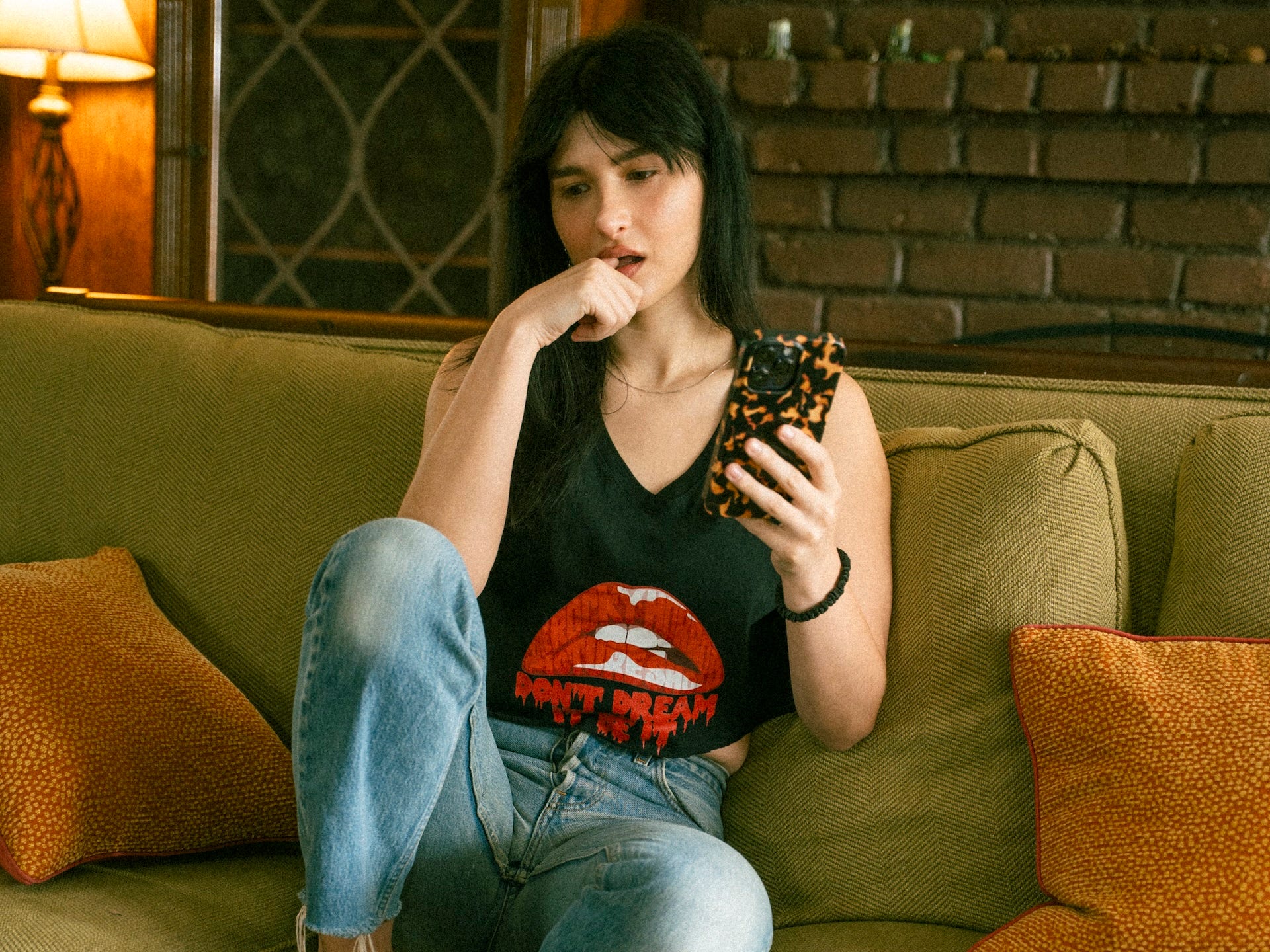
I know Amanda Bannington a lot better than I know Sophia Ventrone. I’ve lived with Amanda Bannington for years, inhabiting her head, letting her inhabit mine. If writing autofiction about swanky parties is playing God with society dolls, then writing character studies of fictional people is like letting spirits from another plane possess you and inhabit your soul.
Amanda Bannington is by several counts a terrible, unforgivable person, and it was reasonable to expect that any story about her should have some analytical distance. You start writing, though, and the dominoes fall. It happens in degrees. First, her magnetic disarray contaminates her loved ones. Then it spreads to her longtime associates, then her new associates, then the narrator. I shouldn’t have been surprised when I was the next figure in line to get hit by the shockwave. There is no minimum distance from your own characters. There is no way to write someone like Amanda for that many years without having her rub off on me.
It’s quite a thing to do, then, to ask someone else to play a role like that. It’s like asking them to undergo a demonic possession. There are lots of ways to rationalize it, like saying it’s just for a day or that it’s easy to come back to reality. In the end, though, the actors must like it. After all, they certainly go through a lot of hell to try and make a career of it. It can’t just be the money and the fame that draws them in. It has to be the darkness, too. I have to believe they’re willing participants in this ritual of ours.
I can be brusque sometimes in life, but I’m very kind to actors. I think it’s because my father’s an actor and I love my father and I see how sensitive he is. I think I see my father in the eyes of every actor I’m directing, even Sophia. I do believe they have the most difficult job on set, harder than the director. When you’re making a film, especially an emotionally devastating film, safeguarding the sanity of the actors is just about the most sacred thing you can do.
I wasn’t trying to make a film with Sophia, though. I was trying to fake a film. I’ve got a filmmaker’s mind, and I’m always thinking in images. If we couldn’t scrape up a million dollars to shoot A Cancellation, I figured we could at least do a photo spread. We could have production stills for a nonexistent production. We could play Hollywood, just like so many others at a time when Hollywood is imploding. There’s a certain nihilism inherent to the way technology is ripping through the business so fast. We have to find new answers for the age-old question, “Why do we do this?”
Why do we do this?
The third time I met Sophia, it was at that promised house in the Valley. Before I even got there, there was a crisis. There’s always at least one crisis in a production. You just need to hope that it’s small and that you’re prepared and that you get it out of the way as soon as possible. In this case, our crisis was overcome with a little field engineering. Evan, the photographer from New Ritual Press, built a makeshift structure to solve it with the help of Will, the owner. Will’s a nice man. It’s funny how nice he is, because I always run into him at stark, harsh parties where people go to be iconoclastic. I think a lot of people are drawn to iconoclasm, though, because they’re defensive, and their defensiveness is born of sensitivity. That sensitivity also brings a certain kindness.
Will welcomed us into his home. He charged us nothing. Sophia and I had both brought clothes for the role, to try and help her conjure the spirit of Amanda Bannington. She told me she didn’t care where she changed. She told me she didn’t care about being naked, that it was just a body. We got her a dressing room and her privacy regardless. Then we started by shooting with the book. There was Sophia, dressed in character, reading for the camera. It was a soft transition into the world of unreality. It was like Sophia was going to pick up the book, fall into the pages, and tumble back out as Amanda. At least, that was the hope.
Evan began to shoot, always smiling, always quick with new ideas. He’s a hard worker. Then, bit by bit, Sophia and I began to search for Amanda. I don’t know if we found her at first in that daylight sitting in the living room. We could feel her close at hand, at least. We could tell she was there.
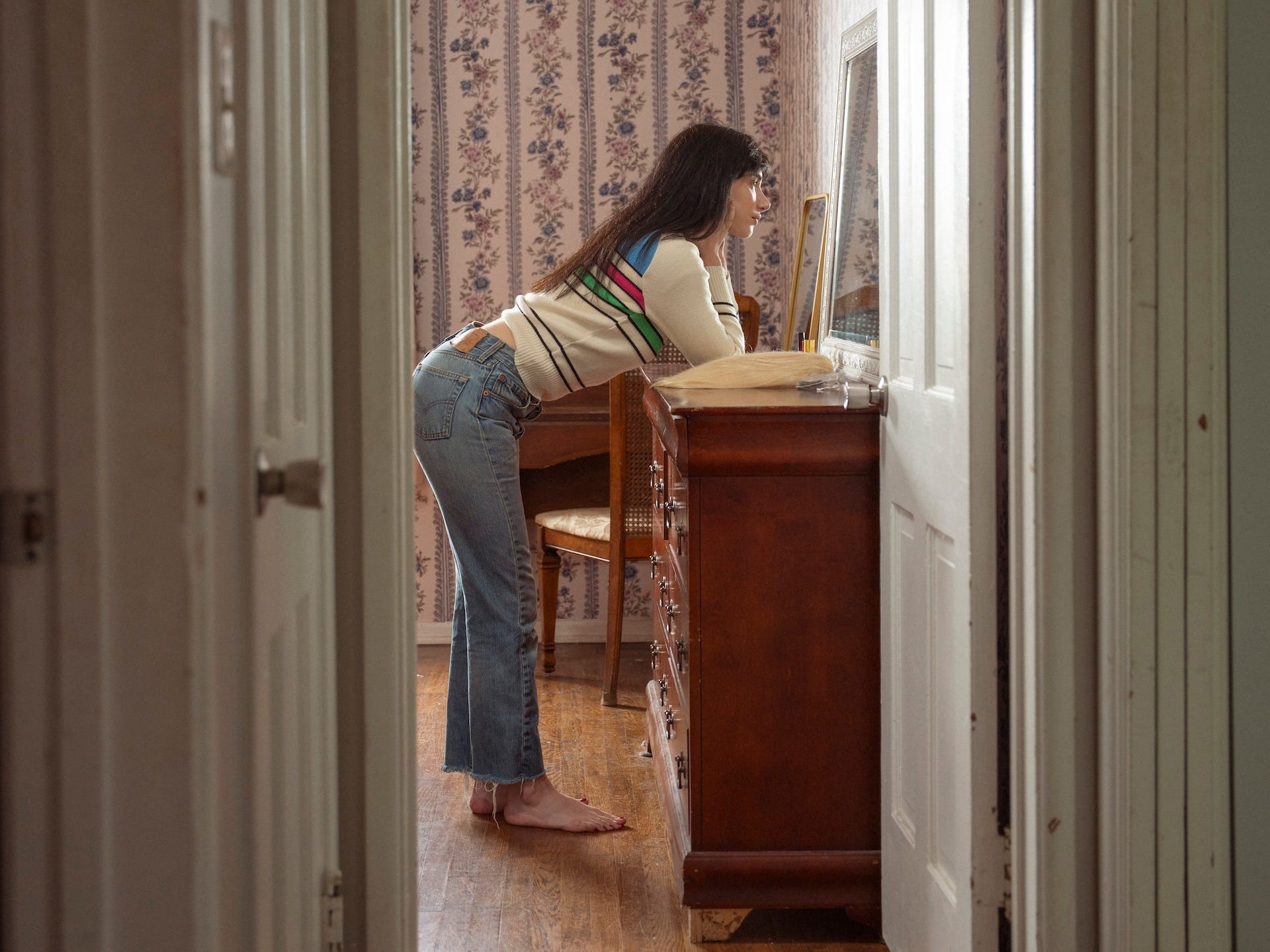
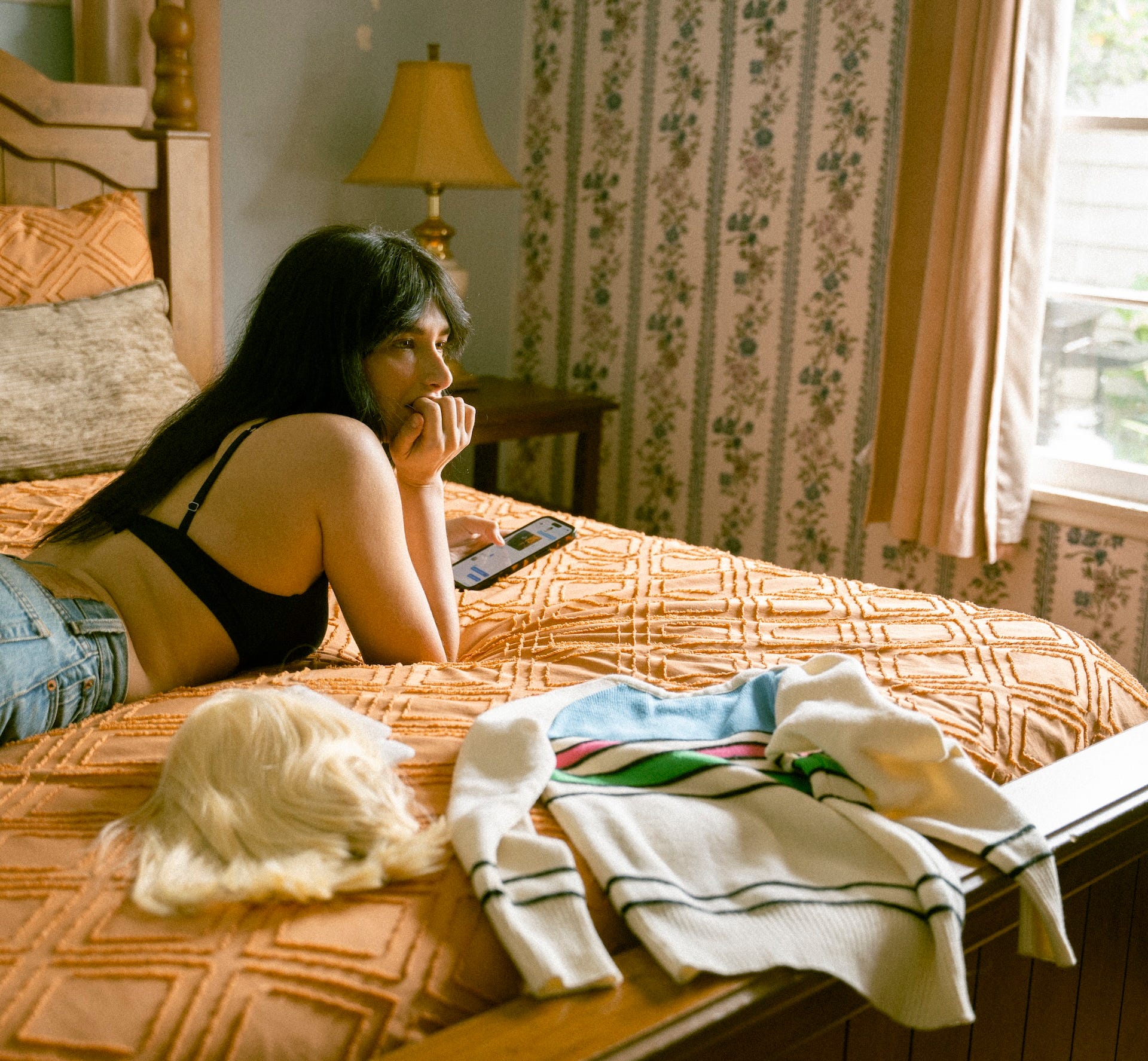
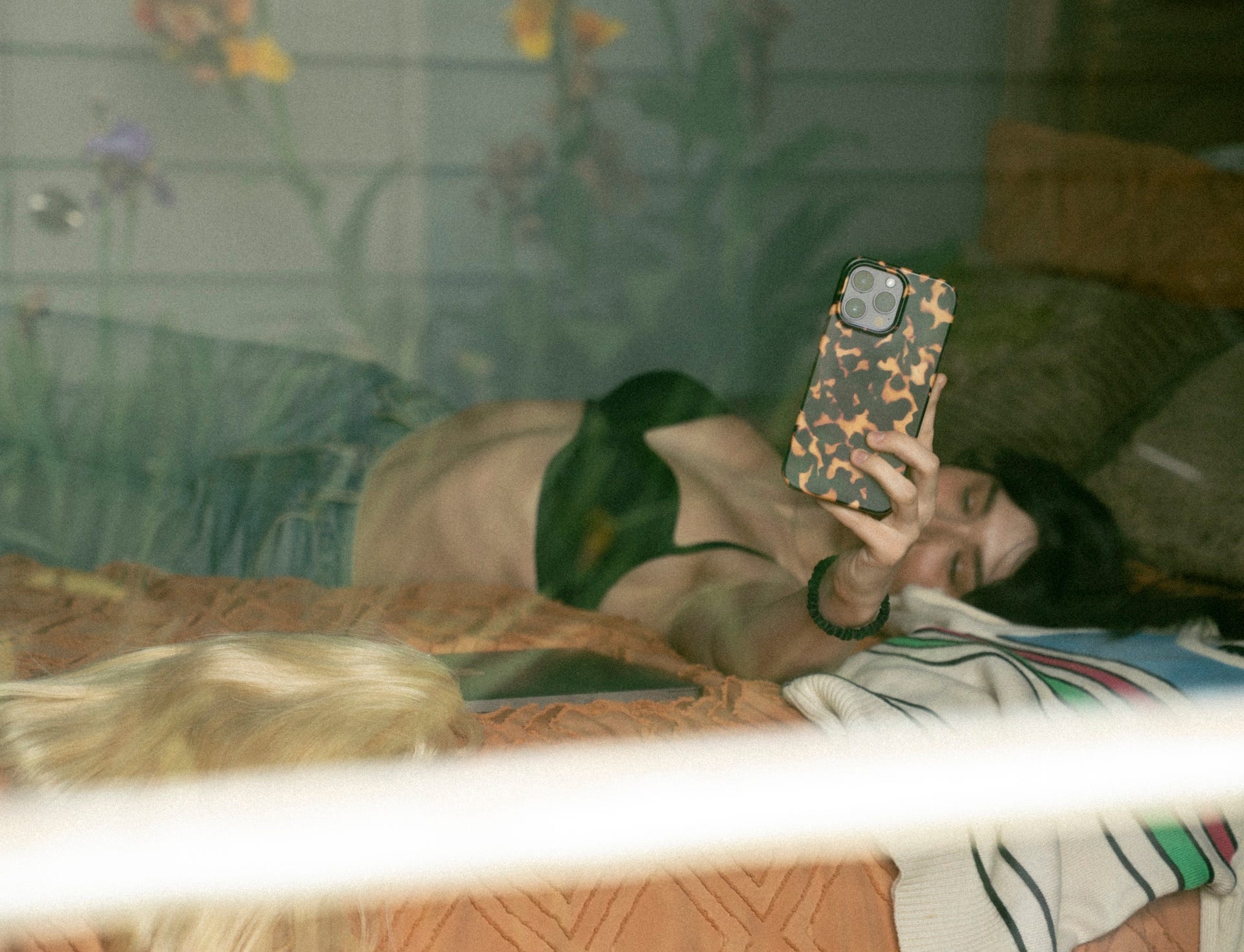
Chasing the spirit, we moved to the bedroom, and we started the sequence of Amanda Bannington changing into her clownish YouTube costume. It was a character within a character, three dominoes, yet another level to reach for for our fake film.
It was easy going through the bedroom blocking with Sophia. It was at once domestic and professional, poised and friendly. I have no idea why she does all this, but I know why I do it. I’m desperate to conjure something that’ll strike the would-be reader straight between the eyes. There’s so much noise out there, so much competition for your attention. The barrier to entry for reading is not the price of the book. It’s simply a matter of focus.
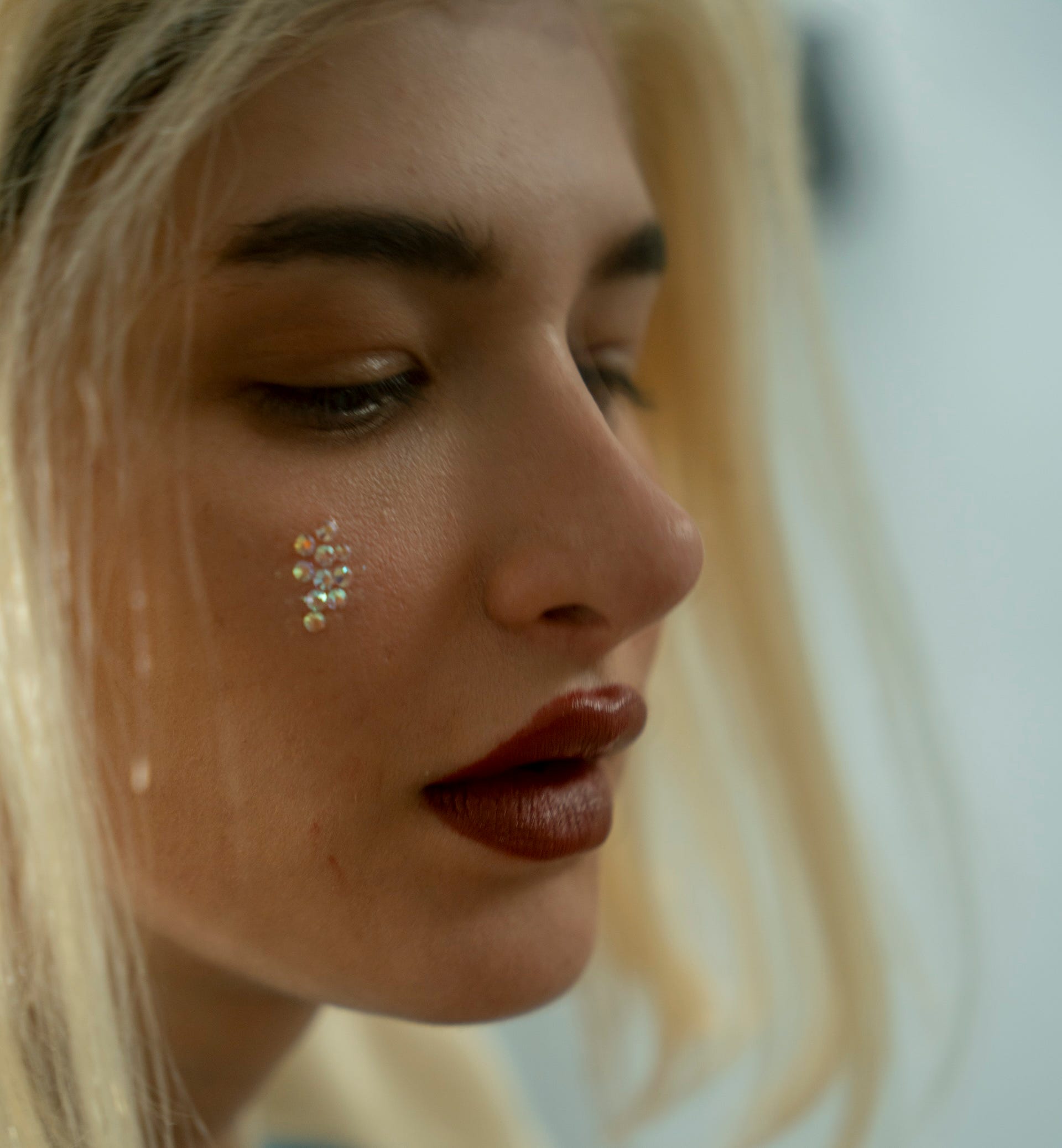
As the day went on, the urge to shake the audience awake filled me more and more. “You see this?” I wanted to say with each shot. “This book is charged! The world of the novel is charged! There’s erotic tension in that ten-point type. You take these photos through your lizard brain and then get off your ass and buy a copy!”
The photos, in that sense, are a shorthand. They’re an attempt to get across in a few milliseconds the experience that the novel provides over nine or ten hours.
Soon enough we move out to the garage. All the lights are off. There’s a fan going, and it’s cavernous and black. We’re putting Sophia in the theater of the mind.
She’s on her laptop, the glare in her eyes, sitting alone in the void. So much of my work, I think, is an attempt to convey the feeling of existing within cyberspace. It’s not exactly cool or fun most of the time. If surfing was an apt metaphor decades ago, it has long since expired. The process now, I believe, is more akin to wandering endless liminal hallways. Occasionally, there’s a Death Grips-esque bombardment of sensory overload. Then you’re back in the series of tubes again.
I give Sophia a rose and I ask her to follow her Muse with it. Obliging, she starts to move the flower in her hands, as asked, touching the petals.
Then I see something shift in her eyes.
A confidence takes her, almost a defiance, so different from the girl at the café. Amanda’s found her, or maybe she’s found Amanda. Either way, she’s moving differently. The book is way back inside on the couch, but Amanda Bannington is here in the black of the garage.
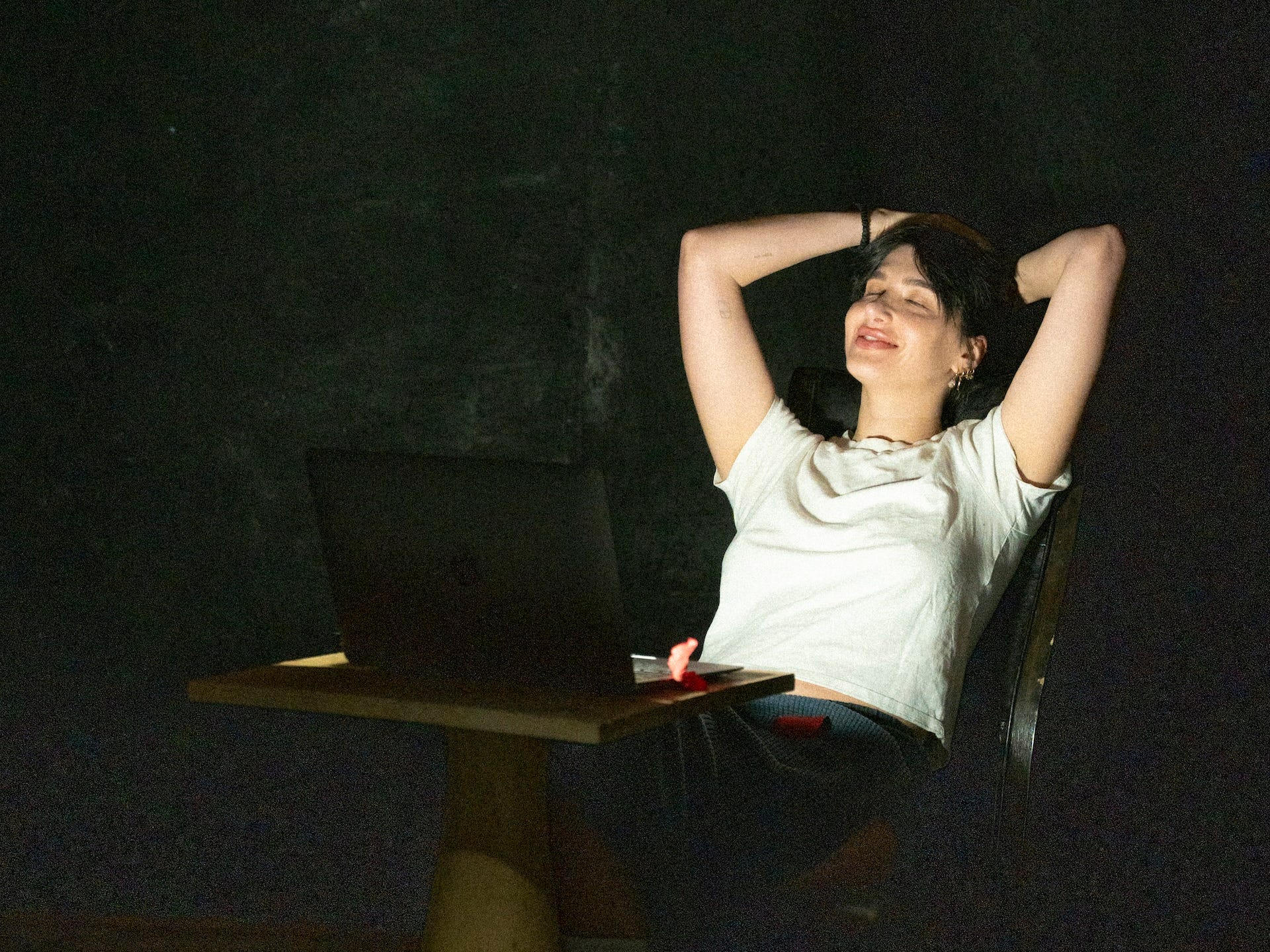
Evan keeps shooting. Sophia stands and starts to stretch, pulling the rose apart as she does so. I have no idea if the lighting’s good, or if any of these photos will turn out. I know, though, that Sophia has finally achieved what we came here for. We may not be making a film for Amanda, but we’ve conjured her regardless. The spirit is grateful, I can tell, for the act of dedication. She’s a little self-centered like that. She takes the rose as an offering and rips it up and scatters it on the floor, glad to have the use of a body for a moment. Then our timer goes off to start our wrap.
In the glow of the laptop light, I bring Sophia back. It’s time to head home. We thank Will, and we leave the house clean, and we eat a few of his Chips Ahoy! cookies on our way out.
Sophia and Evan can’t join me for dinner. They have their own lives to get back to. For all the professionalism and domesticity we created in those hours, none of it was real. We are neither housemates nor regular coworkers. We just put on the act, like carnies, then scatter to the winds. It’s a little LA joke, being temporary besties. It gets you through the production day.
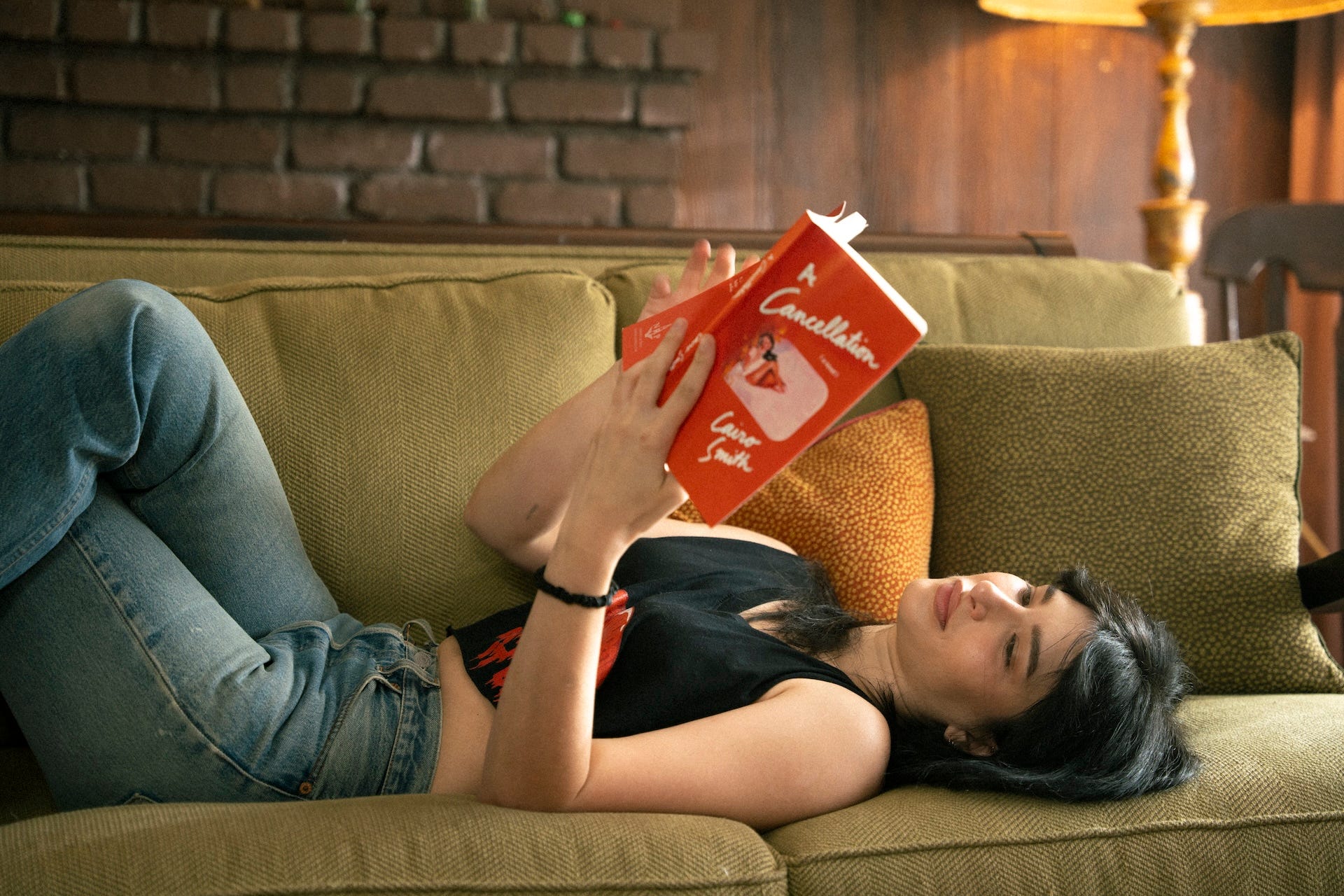
There’s an easy question and a hard question, when I finally get a look at Evan’s shots. The easy question is whether it turned out all right. From clicking through the negatives, I know the answer is yes. It was a good shoot, maybe the best I could have imagined.
The hard question, still, is what it’s all for. You can say it’s for promotion, as I did when I pitched, but that’s not quite it. After all, building a bot to churn out AI slop would probably sell more copies of the book than a set of niche boudoir character shots.
Maybe it’s to make friends. I certainly think there’s a world where Sophia and I become actual friends, if we like, and it wouldn’t have happened without this.
Maybe it’s to get a little closer to that Hollywood feeling, to steal a taste of it every now and then, like going into the lobby of a fancy hotel where you can’t afford a room.
At the deepest level, though, I think we do it for the act of conjuration. It’s that secret transgressive thing that dramatists and actors share, that ritual obsession we can’t get away from. You find a character and you live with her for years, building her up, wondering how she works. The spirit needs a vessel, and so you find one. Then, just for an hour or so, it all turns real, and your doubt is gone.
Find A Cancellation by Cairo Smith on Amazon, available in digital and paperback editions.
