

This piece is free to read without a subscription.
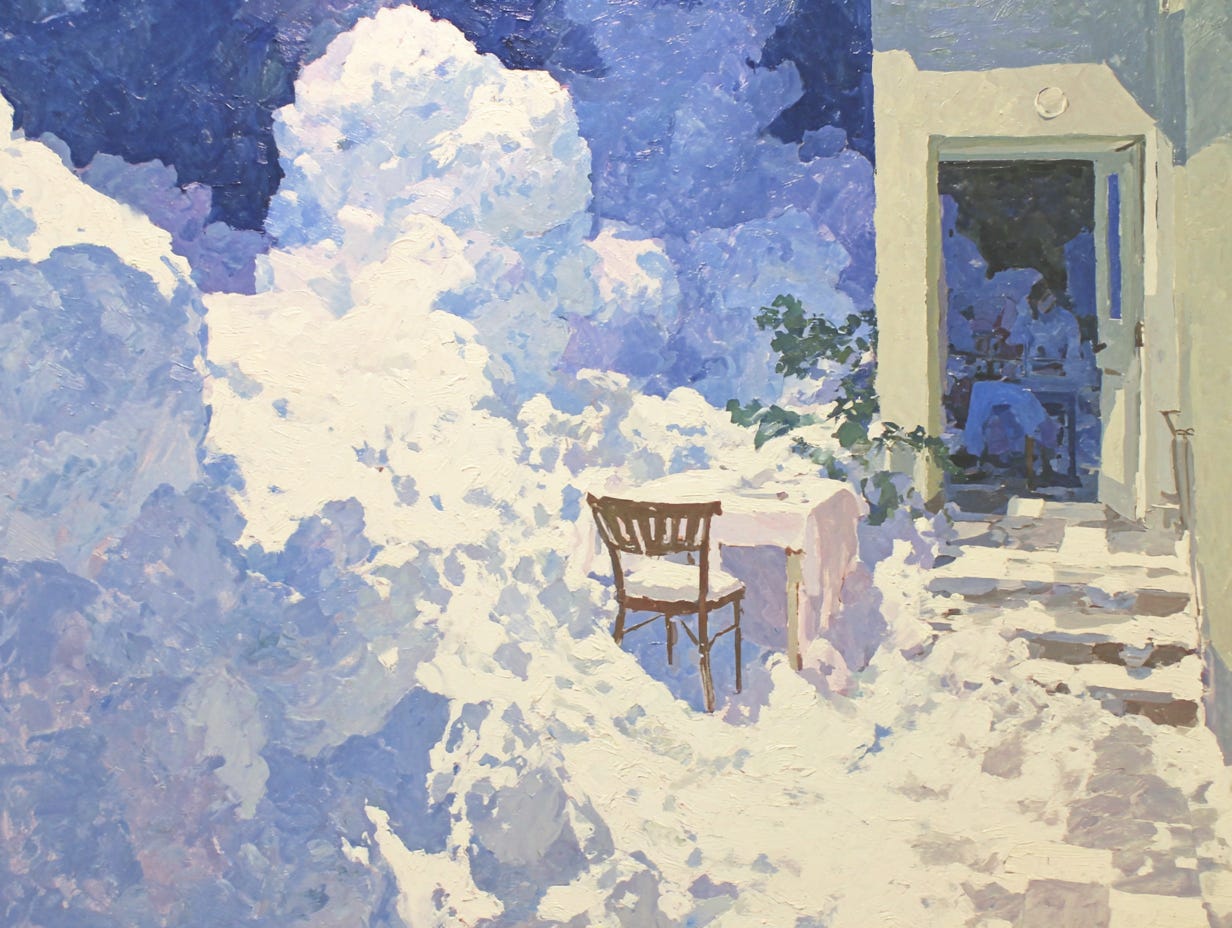
The man arrives late, he’s a little tired. He walks in through the door as usual and takes off his coat, puts it over the chair to the north of the table. The boy watches all this, half-heartedly, quite uninterested. He’d put some fish fingers in the oven earlier, they seem to be taking too long; the oven isn’t at its best it seems, it could be to do with winter, some ebb in the voltage, or they’ve made the fish fingers somehow different this time, more resistant to heat. But why would you want to do that? If anything, it would be more advantageous to make fish fingers less resistant to heat, perhaps better still to do nothing at all, to leave things as they are. There’s something counterintuitive about cooking, according to the boy; you don’t have to cook a computer before you use it, you don’t have to cook your friend before you speak to him… But there’s nothing he can do, more and more people around him have started saying things like we’re cooking! or now we’re cooking! and he’ll soon discover something similar going on in various ‘artistic circles:’ everyone is only able (or only willing) to talk about “processes,” as if, unable to “make things,” they’d been reduced to reciting the ingredients of some infinitely long conceptual recipe, which, simply by virtue of existing, has already demonstrated its profound uselessness. What happened to things, he’ll think, some thirty or forty years later, staring at a local lake, thinking lightly of death.

The death he’ll be thinking of will be not so much his as his father’s, who’s just (see above) entered the room and put his coat over the chair (which has a good slope, like a woman’s shoulders). His father’s death, what an interesting thing. It’s so unwieldy, it came so suddenly… But what an uninteresting thing to talk about, there’s so little to say, and, let’s be honest, thinking is just a kind of talking. Fathers die, why think about it, you only need to think about it after it happens — you only can think about it then — and then, why think about it, it’s already happened. Qua boy, he certainly isn’t thinking about it, the idea of his father’s mortality won’t occur to him until he nearly dies himself, in a strange snowing accident, which won’t happen for another what, twenty, twenty-five years. And during the snowing accident, and even after, he won’t think about his own death at all, only his father’s, which will seem to have been described or promised or perhaps unveiled by the snow, by the strange encircling pain the snow (a mild European avalanche) has visited on him. It will have a fatherly quality as much as a deathly one: nearly dying of it will ‘remind him of his father,’ who always had a sort of snowy quality about him, actually. Some times more than others, and this particular evening (see above) especially so: it’s snowing.
And after placing his shirt on the chair-woman’s shoulders, he brushes himself down a little, to get the snow off, looks over to the boy and says: what are you cooking? You can see for yourself dad, fish. Fish fingers. Advanced shit, the father say. I’m growing up fast, the boy says, I’ll be a man before those fish fingers are ready. Advanced shit, the father says again, modulating his tone to contain the repetition. There’s no need to think about death, neither now nor in the future, neither yours nor anyone else’s, that’s the conclusion the boy will later reach, qua man. All thoughts of death indicate a failure to remember; thoughts of death occur when you either can’t remember or you’ve run out of things to remember, but both of those situations are illusory, he’ll think, at some dumb lake which he came to precisely to think this thought. Advanced shit, he’ll think, remembering it exactly, the tone of voice, the exact scene, which will have effortlessly occurred to him, emerging out of the lake just as the sword does in the story, to be to reached out for and gripped hard around the middle. And then, of course, he’ll go back to his own house which he’ll have sort of cobbled together in the meantime, though he’ll have decided, most likely, against having children. Don’t like them much, don’t really see the point, he’ll think, but even that thought will have somewhere in it this strange reductive refrain, which will have become part of him at this point, a part of him that seems central, or perhaps centring, at least a part which it’s easy to take hold of, this little phrase of his dad’s that already striking him (see above), in its lightness of touch, its ease, its understanding, this little remark his dad always makes on seeing his son do anything slightly different from what he was doing immediately before. Advanced shit… fathers have said, and, of course, done, much worse, perhaps they’ve even done better, but, he’ll almost certainly think, standing in the shallow water of a local lake, why think about that?

Behind the Scenes
As part of our commitment to keep all our essays and stories free, we ask our authors to pull back the curtain and share a little bit about their writing process and intent as a bonus for paying members.
You can find an explanation and reflection from the author of this piece just below…
